A wedding timeline can run beautifully until eight people, three bouquets and a full-length gown are asked to fit into a vehicle designed for four. To choose wedding transport capacity well, count more than heads. You need to allow for formalwear, personal space, bags, changing weather, pickup locations and the way each group will move through the day.
For Melbourne weddings, transport also needs to work around real conditions: CBD traffic, limited venue access, rain at outdoor ceremonies and travel between a hotel, ceremony, photo locations and reception. The right vehicle plan keeps your party comfortable and on time, without turning the first part of the day into a logistical exercise.
Start with each journey, not the total guest list
A guest list of 100 does not automatically mean transport for 100 people. Begin by mapping every trip that requires a vehicle. The bridal party may travel from one address to the ceremony, immediate family may need a separate pickup, and guests may need a late-night transfer from the reception to accommodation or a central drop-off point.
Write down the passenger group, pickup point, destination, required arrival time and whether the same people are travelling again later. This quickly shows where a luxury sedan is ideal and where a people mover or a planned shuttle service makes more sense.
The most common mistake is booking for the ceremony alone. Consider the full schedule: getting ready, ceremony arrival, photography transfers, reception entry and the journey home. A smaller vehicle may be perfect for the couple’s private departure, while a larger vehicle is more practical for the wedding party earlier in the day.
Separate people into travel groups
Do not assume everyone will leave from the same location or at the same time. Couples often need a quiet, elegant transfer. Bridesmaids and groomsmen may be travelling from different addresses. Parents and grandparents may appreciate a direct pickup with no walking between car parks or venues.
If guests are coming from interstate or overseas, they may not be familiar with Melbourne’s roads, public transport or late-night options. Pre-arranged group transfers offer certainty, particularly for venues in the Yarra Valley, Mornington Peninsula, Dandenong Ranges or other locations where rides may be harder to arrange on demand.
Count seats honestly, then allow room
Passenger capacity is not the same as comfortable wedding capacity. A vehicle that technically seats a certain number of passengers can feel very different once people are dressed for a formal event. Wide skirts, suits, hats, flower boxes and garment bags all require room.
As a practical rule, avoid booking every seat unless the journey is short and everyone is travelling light. For longer trips, or when passengers are in formalwear, leave one or two seats spare where possible. The additional room makes boarding easier, helps protect outfits and allows everyone to arrive composed rather than cramped.
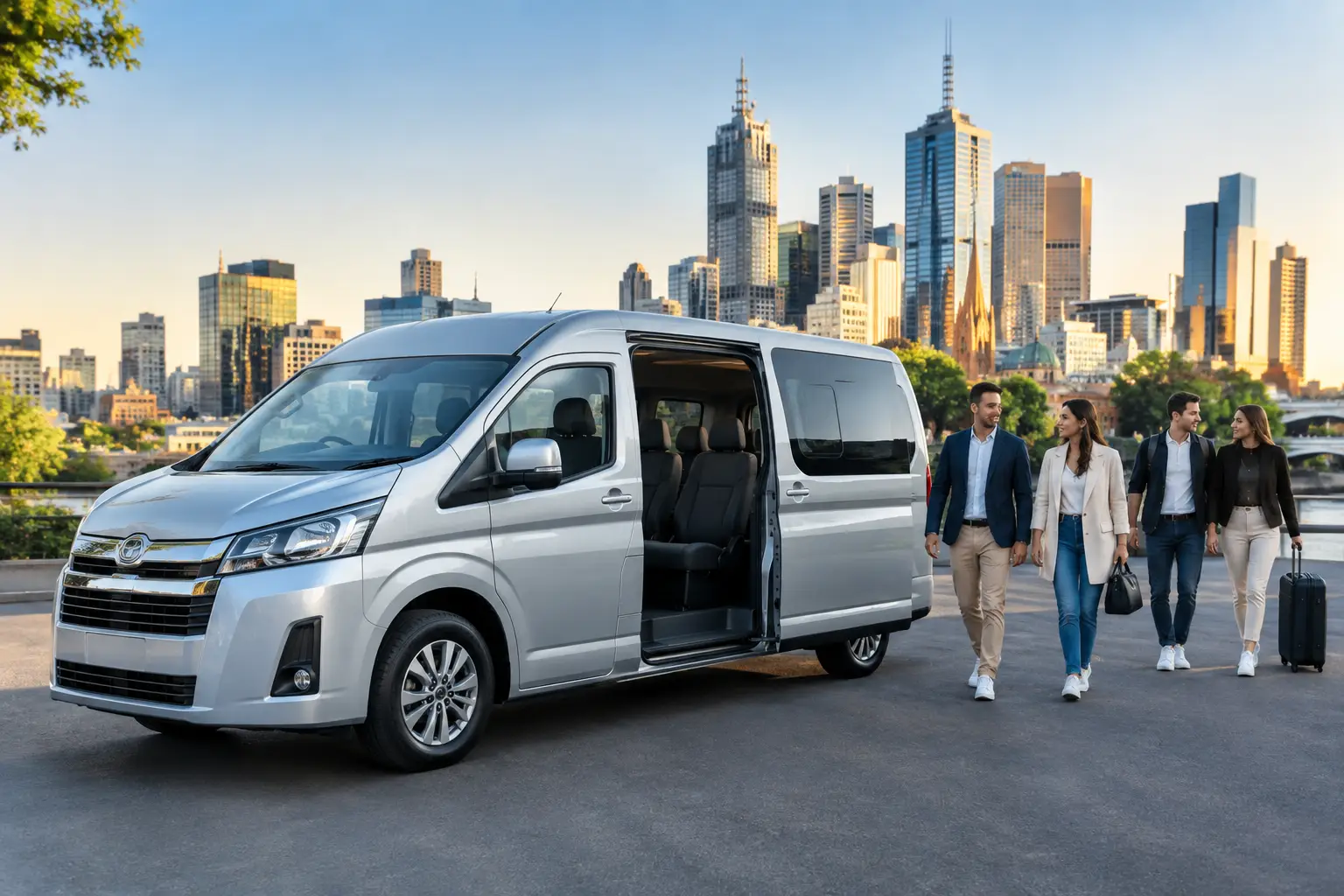
This matters especially for the wedding party. A standard sedan is often an excellent choice for the couple, or for two to three passengers who want a refined and private journey. Luxury SUVs offer more room for small groups and belongings. For larger bridal parties, family groups or guest transfers, a people mover that carries up to seven passengers is generally the more comfortable option.
Always confirm the stated passenger capacity with your chauffeur provider, including whether it refers to passengers only and how much room remains in the boot. Vehicle dimensions can vary within the same category.
Make room for dresses, flowers and personal items
A wedding vehicle carries more than passengers. Consider gowns, veils, spare shoes, umbrellas, bouquets, jackets, gifts, signage, children’s items and overnight bags. If the couple is travelling from the reception to a hotel or airport, luggage capacity becomes a central part of the decision.
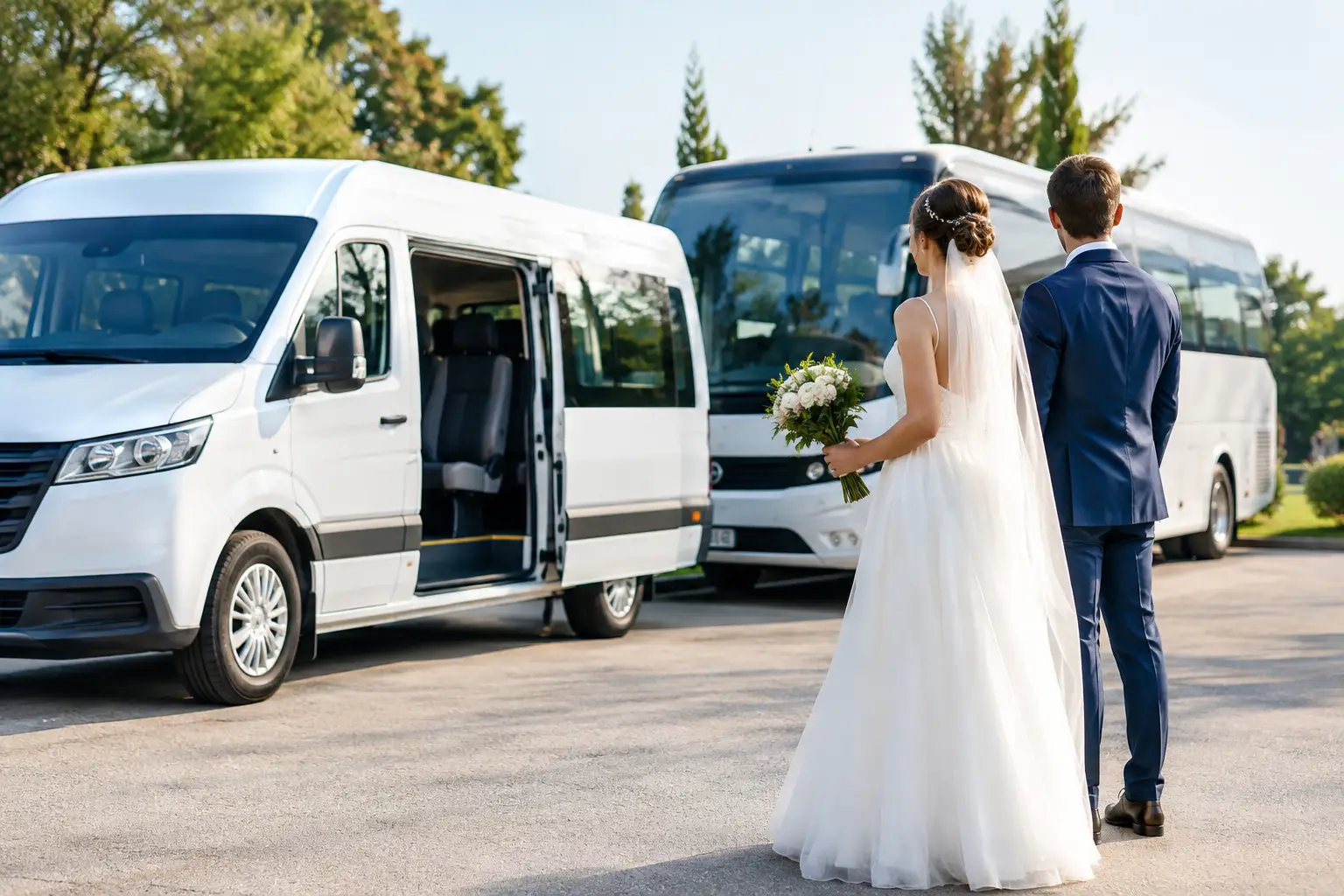
A voluminous gown can occupy the space of an additional passenger. It is often wiser to give the bride and gown more room than to add one more person to the vehicle. Ask whether a larger vehicle is available for the bridal transfer, even if the passenger count appears modest.
For guest transport, luggage may be less relevant during the day but more significant at the end of the evening. Hotel guests who have checked out before the ceremony could be carrying bags, while older guests may have mobility aids or require more convenient access. Mention these details when requesting a quote so the vehicle allocation can be planned properly.
Choose capacity around the wedding timeline
The quickest route is not always the best route on a wedding day. A vehicle plan needs enough time and capacity to absorb small changes without placing pressure on the couple or their guests.
For example, the bridal party may require two vehicles rather than one larger vehicle if different members are getting ready across Melbourne. This can reduce waiting time and ensure everyone reaches the ceremony in the right order. Conversely, a single people mover can be an efficient option when everyone is departing from one hotel and travelling to one venue together.
Think carefully about the return journey too. If your reception finishes late, a series of scheduled departures may be more useful than one large pickup at the end. Guests can leave when they are ready, and the host does not have to manage transport while trying to enjoy the celebration.
Allow a buffer for arrivals and photographs
Plan for the first vehicle to arrive before it is needed, not exactly at the scheduled departure time. This gives passengers time to board, settle dresses and check they have phones, rings, flowers and essential items.
If transport is included in the photo schedule, account for getting in and out of the vehicle, travel between locations and potential traffic. Melbourne conditions can change quickly around major events, roadworks and peak periods. An experienced chauffeur can plan a traffic-aware route, but a realistic schedule still matters.
Consider accessibility and guest comfort
Capacity planning should make guests feel considered, not simply accommodated. Older relatives, young children and anyone with limited mobility may need more space, easier entry or a pickup closer to the door. It can be helpful to allocate them to a quieter, direct transfer rather than the busiest group vehicle.
Children also affect capacity. Child restraints take up space and need to be arranged in advance. If children are travelling, provide their ages and any restraint requirements when booking. Never treat them as an afterthought in the seat count.
Comfort can also mean keeping groups together. A transfer for close family or interstate guests gives them time to connect before the ceremony and avoids the uncertainty of multiple people navigating unfamiliar roads. For some weddings, that shared journey becomes part of the occasion.
When one large vehicle is not the best answer
A bigger vehicle is not automatically the right choice. Multiple vehicles can be better when pickups are spread across locations, passengers have different finish times, or the couple wants a private arrival and departure. It also provides flexibility if the wedding schedule changes.
On the other hand, splitting a group can create coordination issues. People may arrive separately, miss a pickup or wait at the venue. The best choice depends on your locations, timing and the level of support your guests need.
Discuss the complete itinerary with your provider rather than booking only by vehicle size. At VIP Chauffeur Service, this allows the transport plan to be matched to passenger numbers, luggage, travel time and the style of your celebration. A well-maintained sedan, SUV or people mover should suit the journey as well as the number of people travelling.
Confirm the details before you book
Before finalising your wedding transport, check passenger numbers for each trip, the number of dresses and bags, child-seat or accessibility needs, venue access and the latest possible finish time. Give your chauffeur the full addresses, not just venue names, and advise them of any gate codes, loading zones or restricted access points.
It is also sensible to nominate one reliable contact for the day. This may be a wedding planner, best man, maid of honour or family member. They can handle minor timing updates so the couple can stay present for the celebration.
The most comfortable wedding transport plan rarely feels extravagant for its own sake. It simply gives every important person enough room, enough time and a dependable way to arrive ready for the moment.